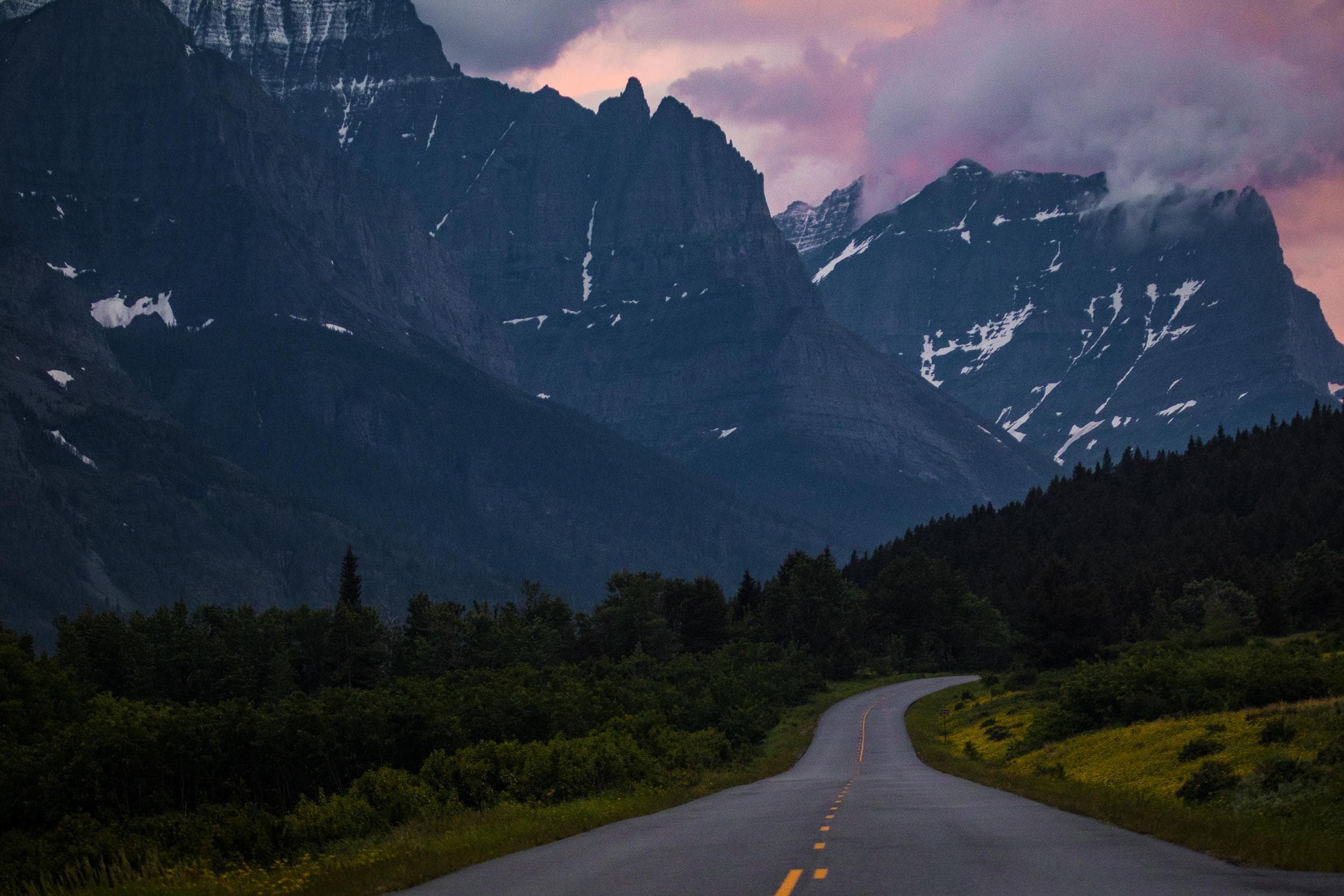
A showcase of melting glaciers, alpine meadows, carved valleys, and spectacular lakes. With over 700 miles of trails, Glacier is a paradise for adventurous visitors seeking a landscape steeped in human culture. Relive the days of old through historic chalets, lodges, and the famous Going-to-the-Sun Road.
Official NPS WebsiteAir Quality Impacted by Wildfire Smoke
Smoke from regional wildfires is affecting air quality in the park. When air quality is a concern be sure to: 1) monitor air quality and smoke forecasts 2) assess your own sensitivity to poor air quality, and the sensitivity of others in your group and 3) adjust outdoor activities as needed. Find out current air quality conditions at https://fire.airnow.gov.
CautionTwo Medicine North Shore Trailhead Reroute
In 2026, Two Medicine's North Shore Trailhead is not accessible due to construction in the Two Medicine Campground. A reroute has been established to access the North Shore Trail but does require a ford (unbridged water crossing). Directional signage is in place marking the reroute. Hikers may also access Twin Falls, Upper Two Medicine Lake, No Name Lake, and Dawson Pass without a ford, by using the South Shore Trail. Note: this adds approximately 1 mile of distance, one-way.
InformationGoing-to-the-Sun Road is Open for 2026 Season
The Going-to-the-Sun Road is fully open for the 2026 summer season. The road may now be accessed by motorized vehicles over Logan Pass from both the West Glacier and St. Mary Entrances.
InformationGlacier National Park
Glacier National Park is open 24 hours a day 365 days of the year. An entrance fee is required, even when entrance stations are not staffed. Instructions are available at each entrance for self-payment.

Listen to Glacier's Podcast
Rangers recommend Glacier's podcast, Headwaters: a podcast about how Glacier is connected to everything else!

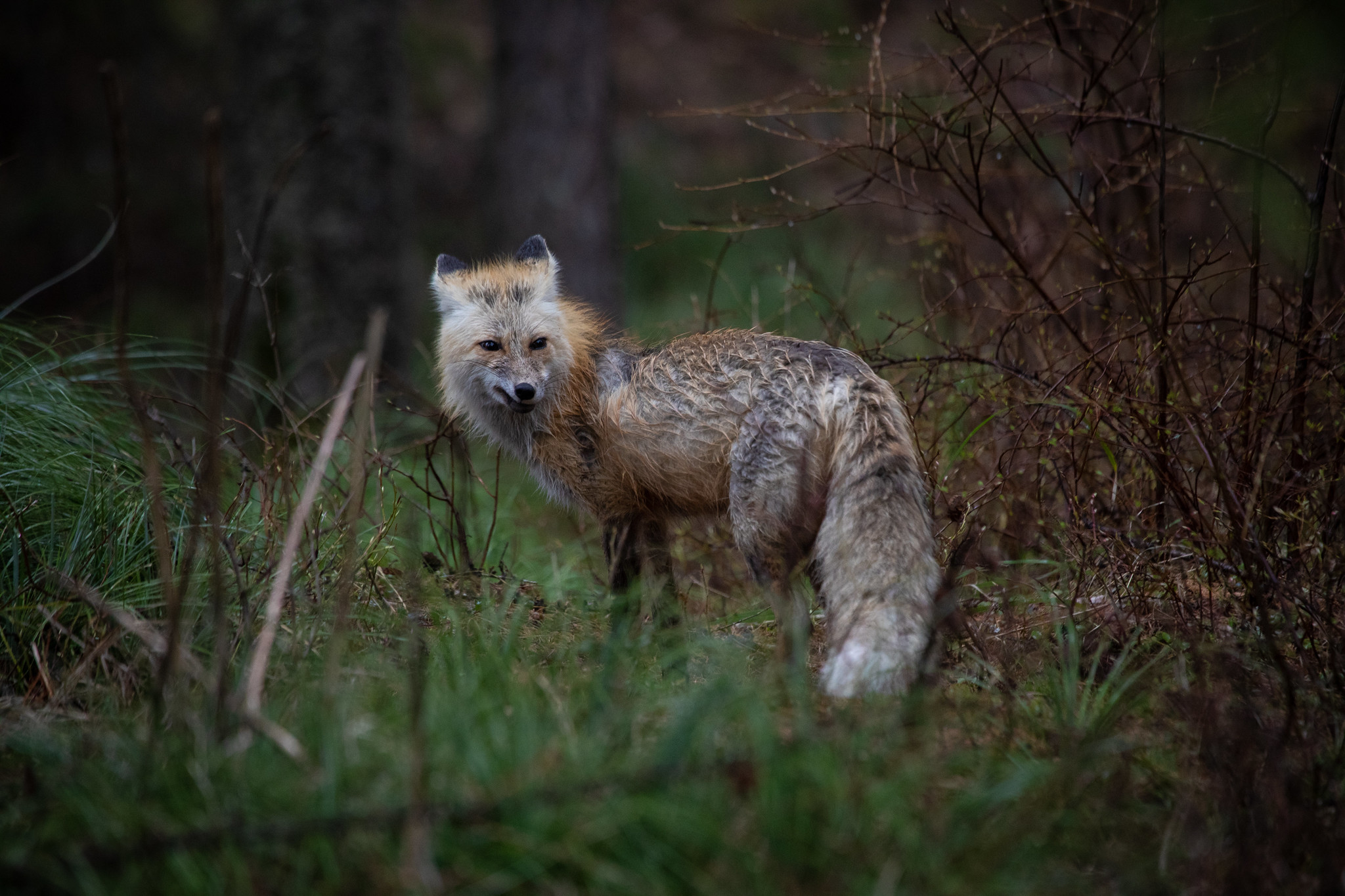
Red Foxes
Red foxes are found throughout the northern hemisphere. In Glacier, they are adapted to a wide range of habitats, from open grasslands to dense forests. Most abundant in riparian areas and along the edges of forests, they are the smallest of the canids found in the park. Red foxes occur in several color phases, but they usually have reddish-yellow coats that are somewhat darker on the back and shoulders, black "socks" on their lower legs, and a white-tipped tail.

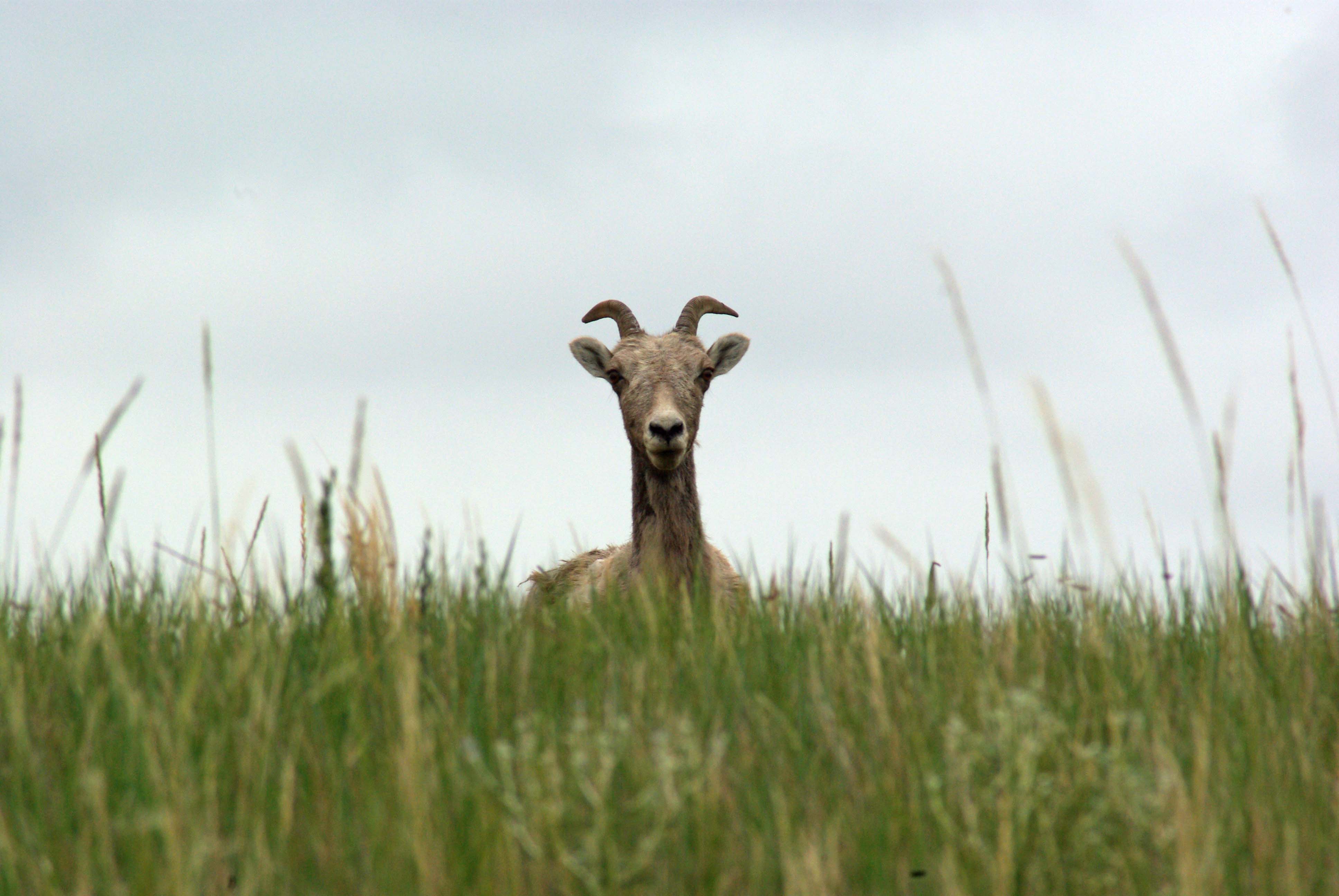
Bighorn Sheep
Bighorn sheep live in a variety of habitats throughout the year. During the summer, they can be found in meadows, fellfields, and on mid-elevation slopes bordered by cliffs and ledges. In the winter, sheep frequent windswept and south-facing valleys and ridges where forage is blown free of snow. Bighorn sheep can often be seen in the parking lot of Logan Pass licking antifreeze from the pavement, which is the most easily accessible source of salt in their diet.

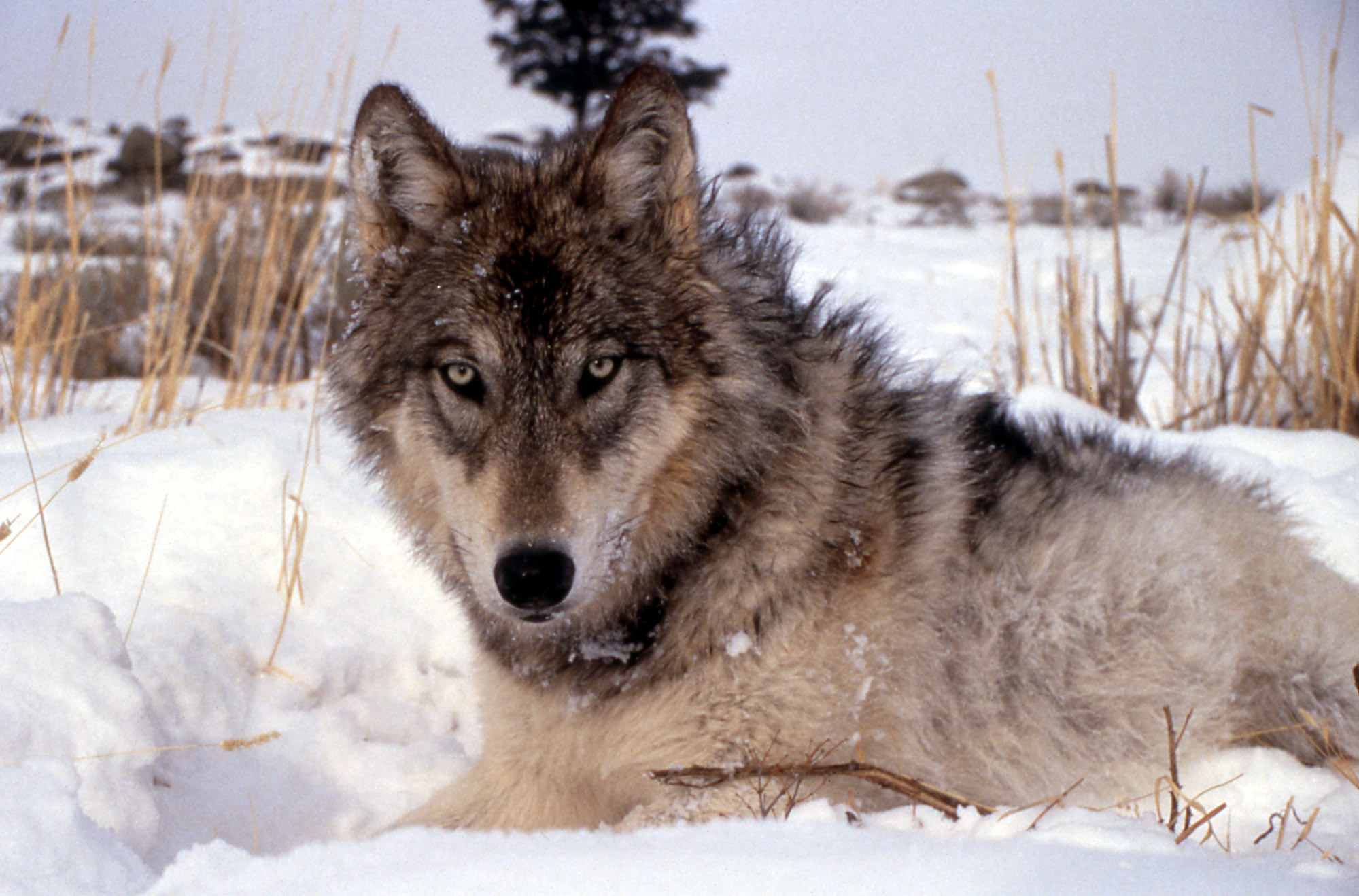
Gray Wolves
The subspecies of gray wolves (Canis lupus) found in Glacier is called the northern Rocky Mountain gray wolf (C. l. irremotus). There are three color variants: gray, white, and black. Wolves are secretive and elusive creatures, with sightings primarily being of lone wolves or pairs.

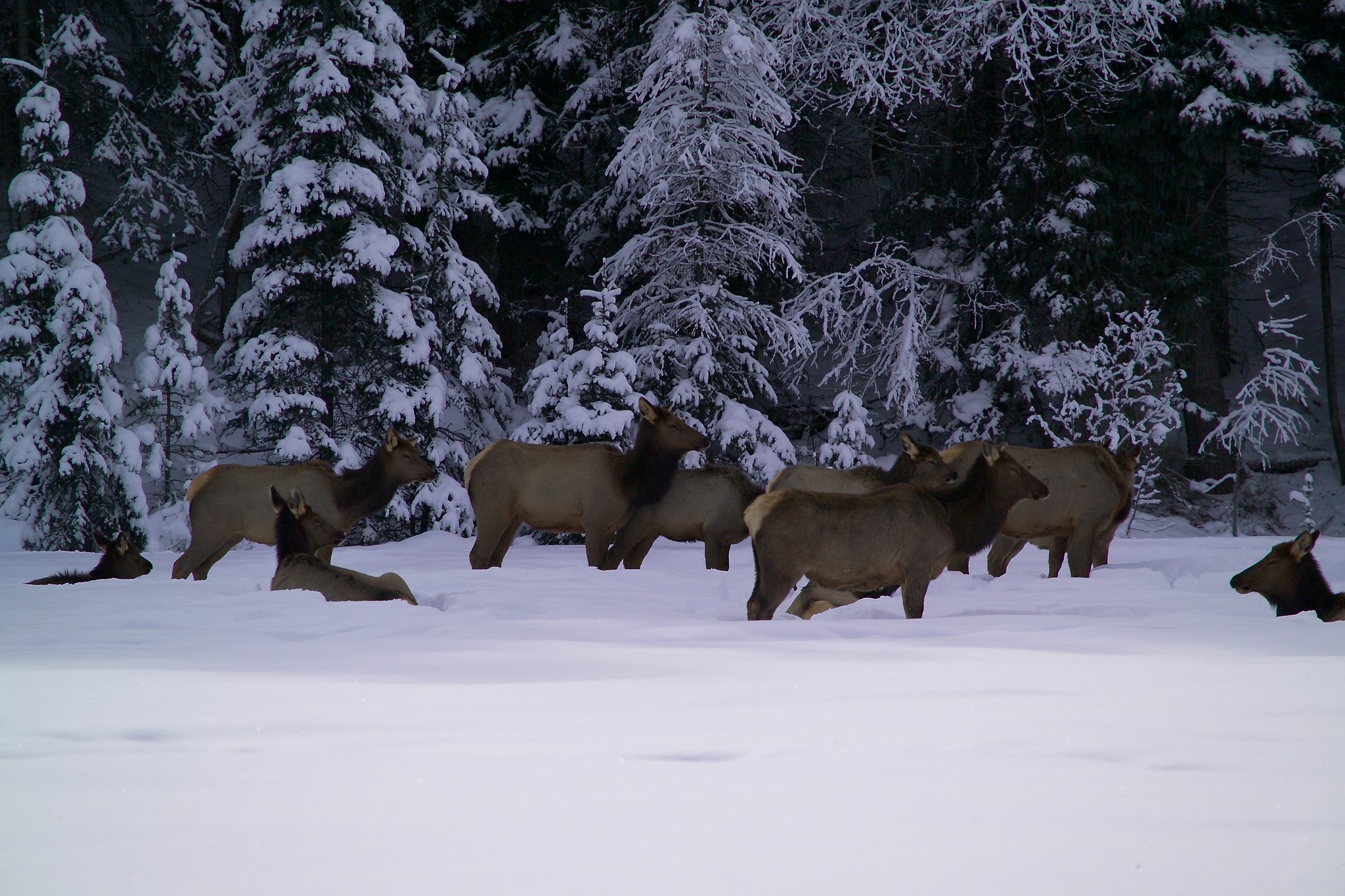
Elk
Glacier provides a summer range for a significant number of elk, while most winter at lower elevations outside the park. The subspecies occuring in Glacier is the Rocky Mountain elk (C. c. nelsoni). They feed on grasses, sedges, other herbs and shrubs, bark of aspen trees, conifer needles, burned bark, and aquatic plants.

Wolverines
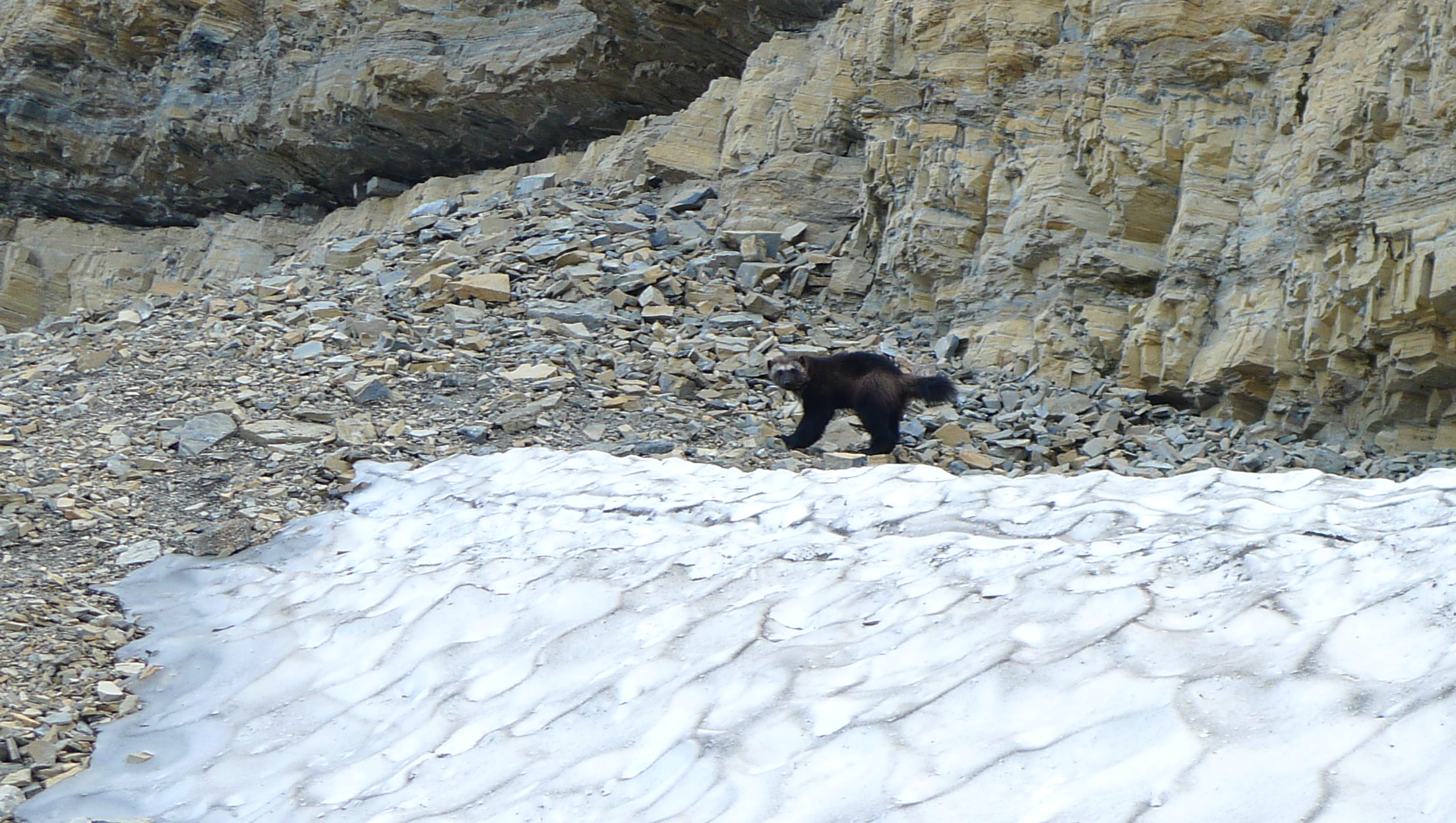
A mid-sized carnivore in the weasel family, the wolverine is active throughout the year in cold, snowy environments to which it is well-adapted. Wolverines are rarely seen and inhabit remote terrain. They are also known as one of the rarest and most elusive carnivores on the planet.

Deer
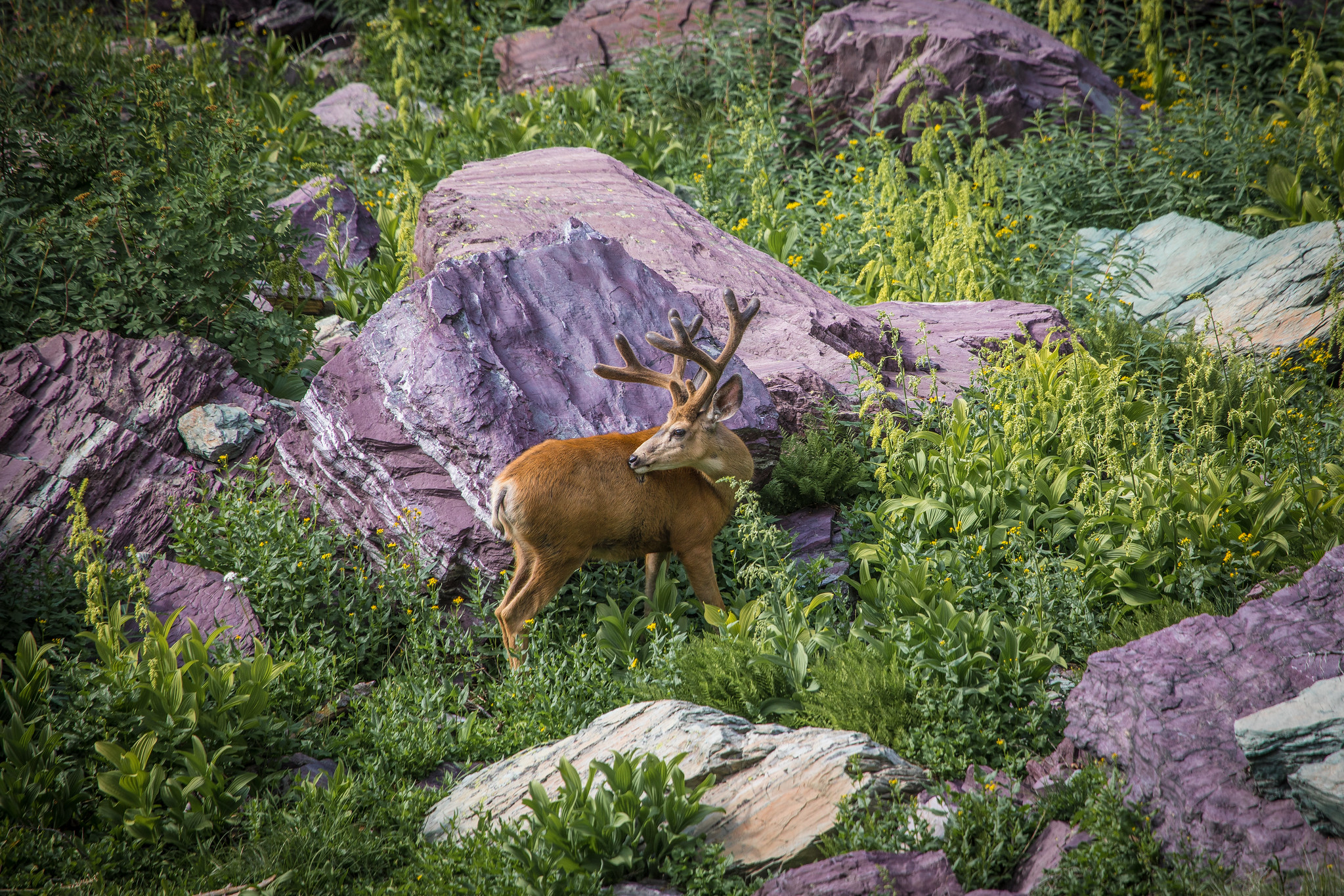
Two types of deer are commonly seen thorughout Glacier: the northwestern white-tailed deer (O. v. ochrourus) and the Rocky Mountain mule deer (O. h. hemionus). Both will flee when in danger. Males grow antlers from April or May through August or September and then shed them in the spring.

All about birding in Glacier National Park
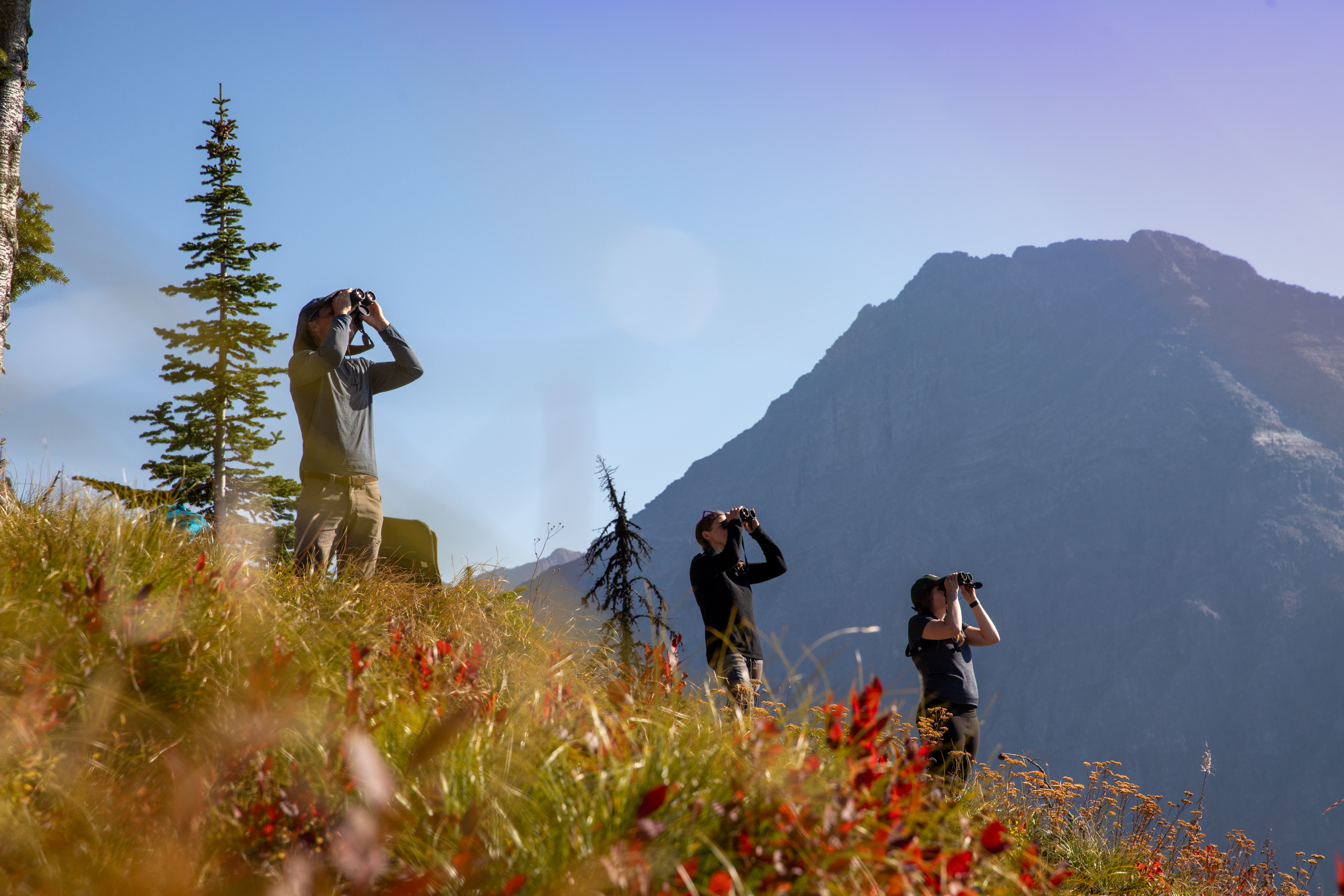
Glacier provides a wonderful opportunity to birdwatch, with plenty of spaces for birders of all ages to sit, listen, and observe the sights and sounds of nature. With 279 documented species including raptors, songbirds, shorebirds, and waterfowl, the park’s variation in elevation and habitat types contribute to a high diversity of bird life.

White-Tailed Ptarmigan
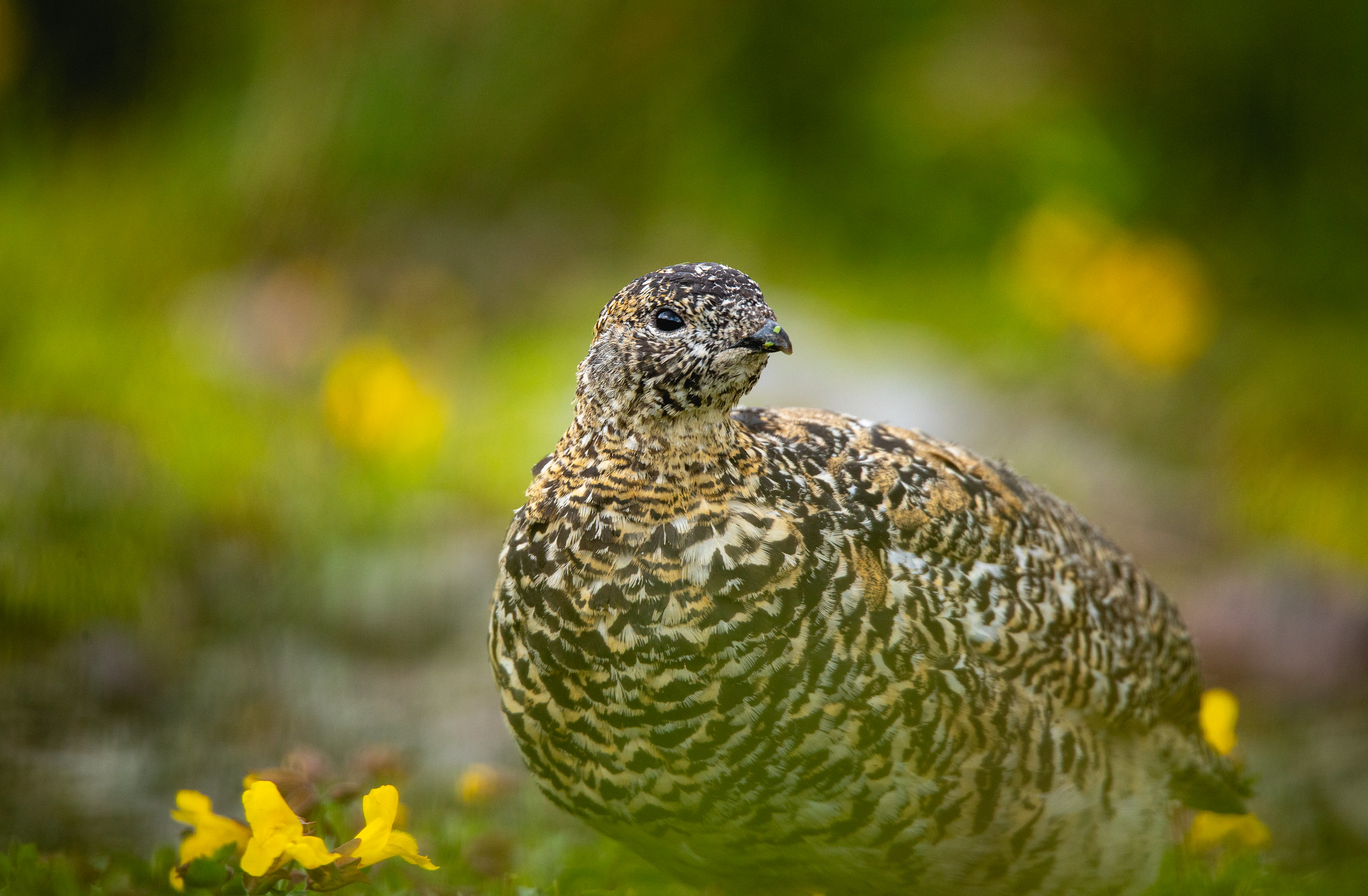
The white-tailed ptarmigan is a medium to large chicken-like member of the grouse family. They are completely white in winter and barred grayish-brown in summer with white wings and tails and feathered feet. Breeding males will have a broad band of black markings across the chest and have red eye combs. Like chickens, they make clucking noises.

Mountain Bluebird
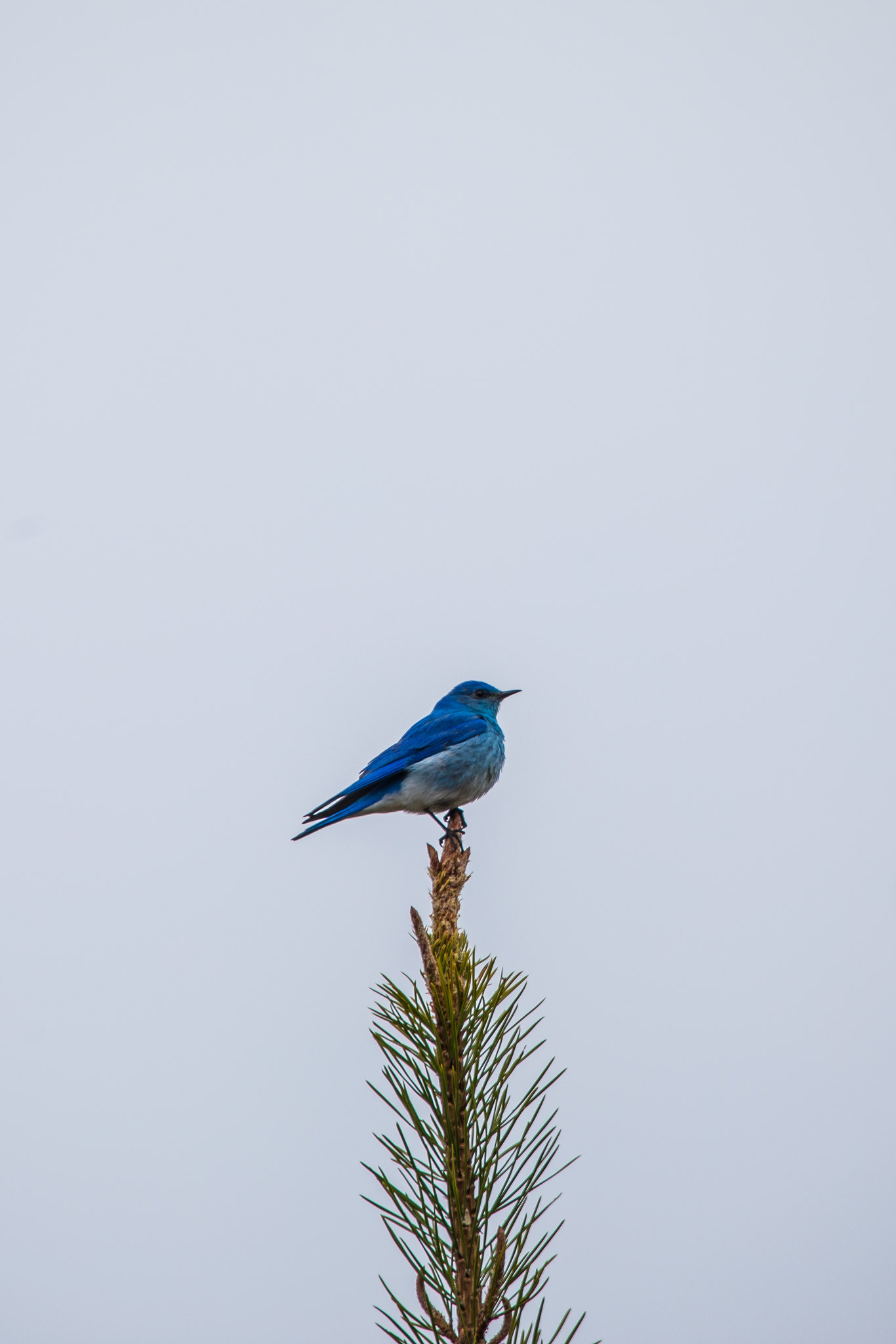
The mountain bluebird is a small bird with a round head and a straight, thin bill. Adult males are bright sky-blue, somewhat paler underneath. Adult females have duller blue wings and tails with gray breasts, crowns, throats, and backs. Their call sounds similar to a thin “tew” while their song is a warbled high “chur chur.”

Clark's Nutcracker
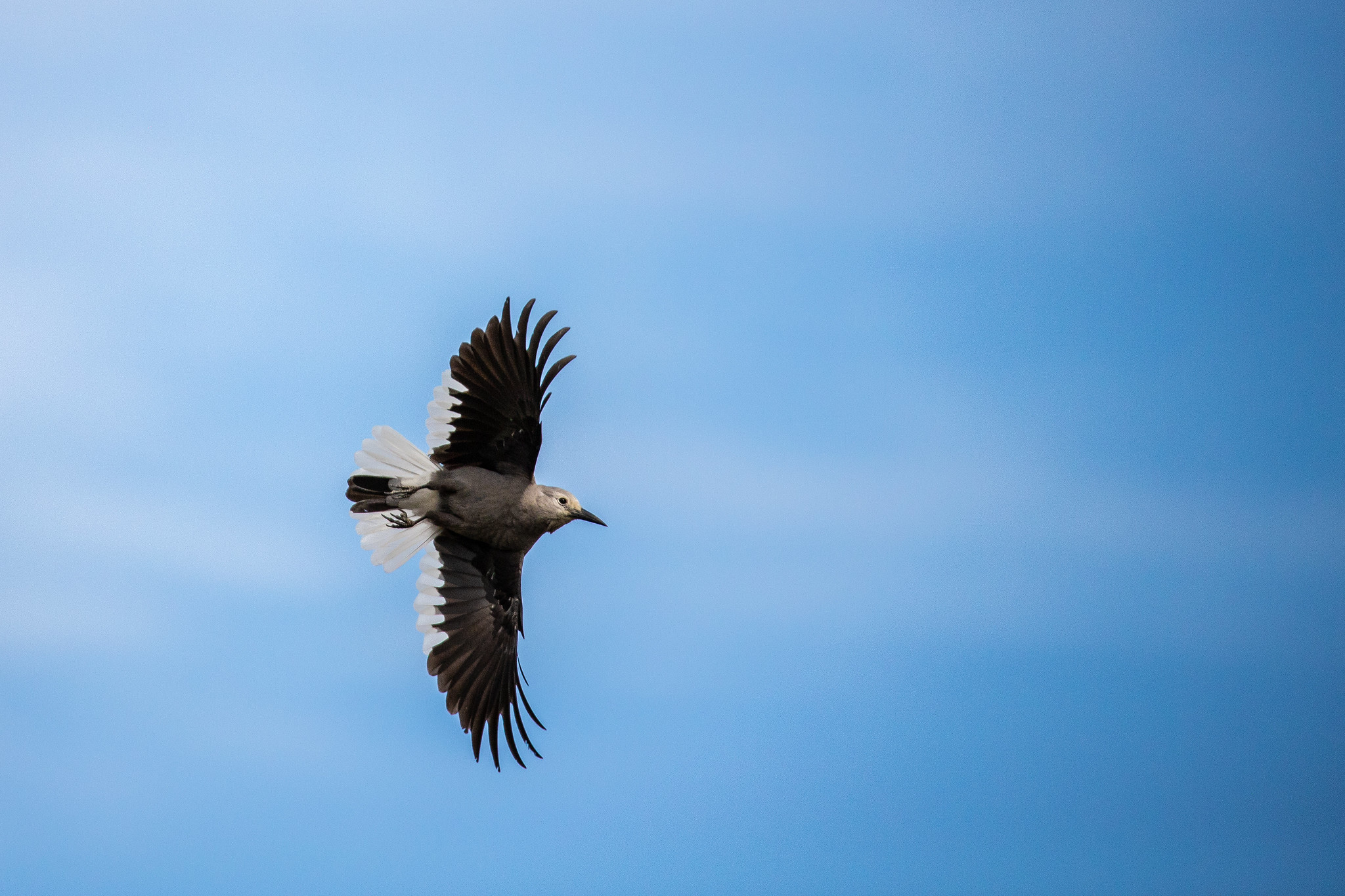
The Clark’s nutcracker has a pale- gray body, black wings with large white patches along the trailing edges, and a black tail with broad white stripes on either side. These birds typically travel in small flocks and call back and forth to communicate. They have a long, harsh, rising call that sounds similar to “shraaaaaaa.”

Harlequin Duck
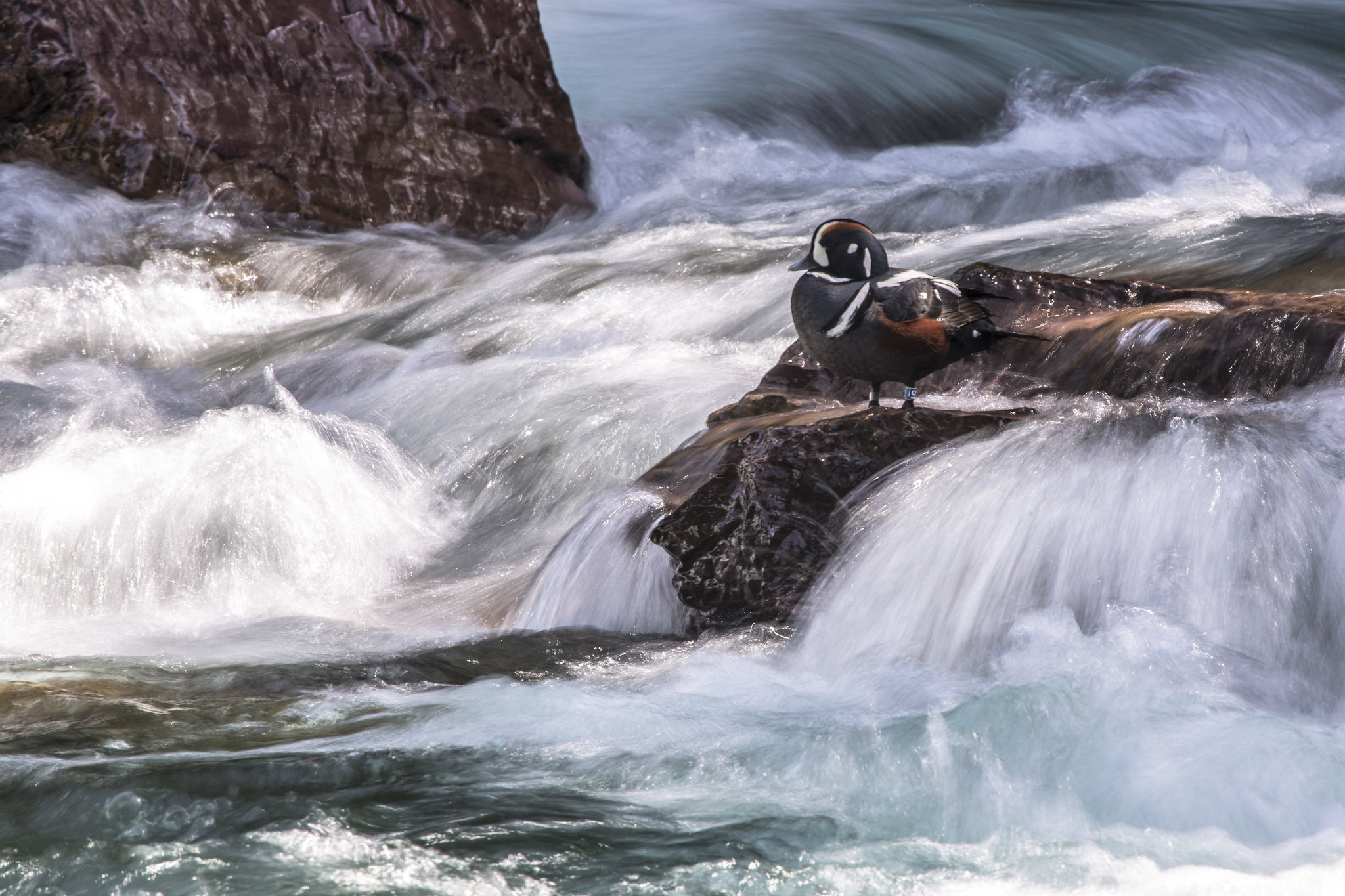
One-quarter of Montana’s harlequin duck broods are born in Glacier National Park. These birds have a low reproductive rate and are very susceptible to habitat loss and degradation. Because of these characteristics, they are listed as a Species of Concern in the state of Montana.

Osprey
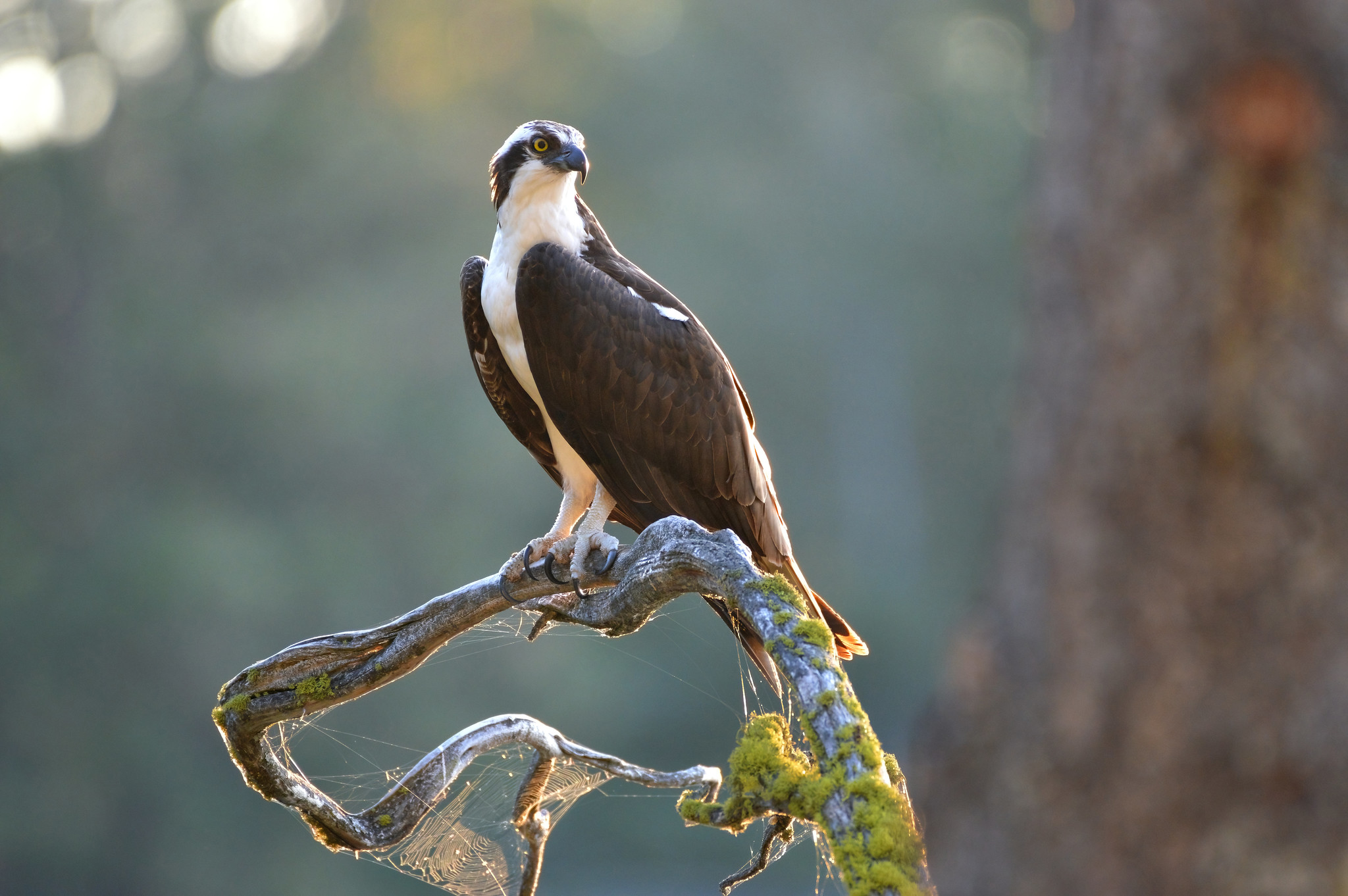
A large bird with a slim body, the osprey has long, narrow wings that have a sharp bend in flight resembling the letter “M.” Ospreys have dark-brown feathers on their back and are white underneath. They also have a notable dark mark at the “wrist” of their wing. An osprey’s call is high-pitched with a series of short, slightly wavering screeches that sound like “too-too-too-tee-tee-tee-tee-too-too.”

Common Loon
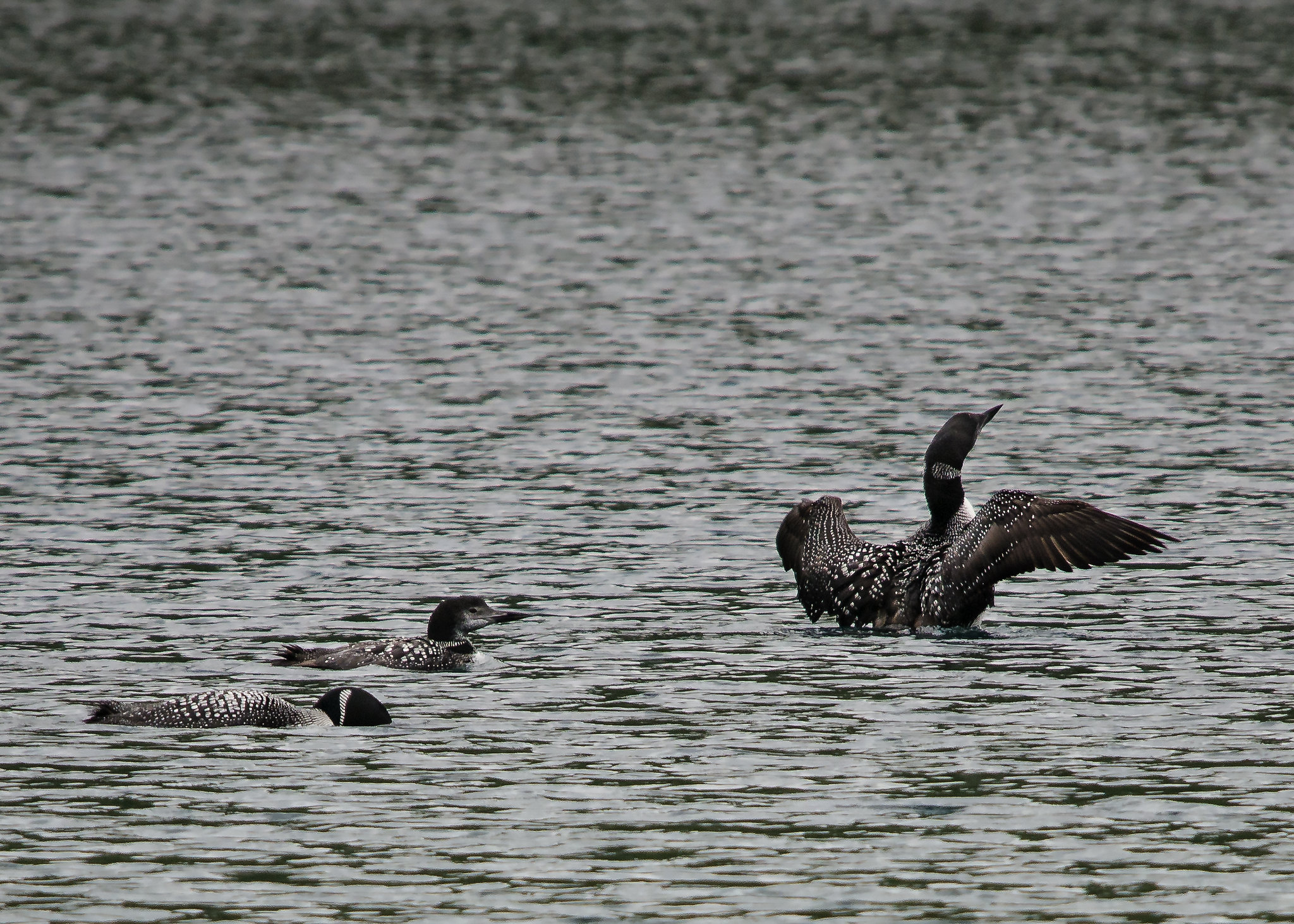
One-fifth of Montana’s nesting loons are in Glacier National Park. Because of their limited range, small population, sensitivity to human disturbance, and loss of breeding habitats outside of the park, they are listed as a Species of Special Concern in Montana. Human disturbance along shores or getting too close to these birds can cause stress and may cause them to abandon their nests.

Owls
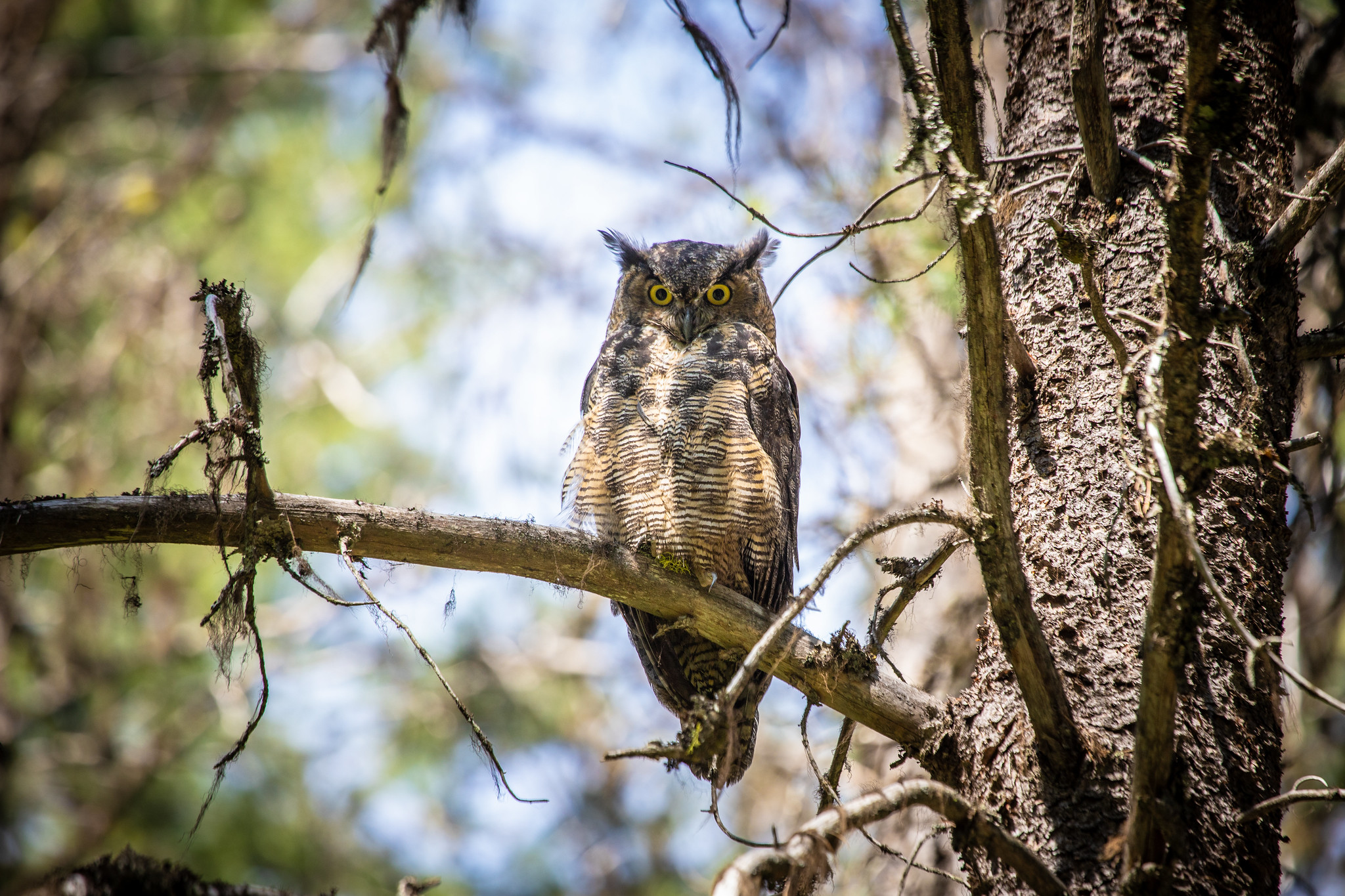
There are four species of owls documented within Glacier, but their nocturnal nature may make it difficult to hear or see one of them while visiting.

Eagles
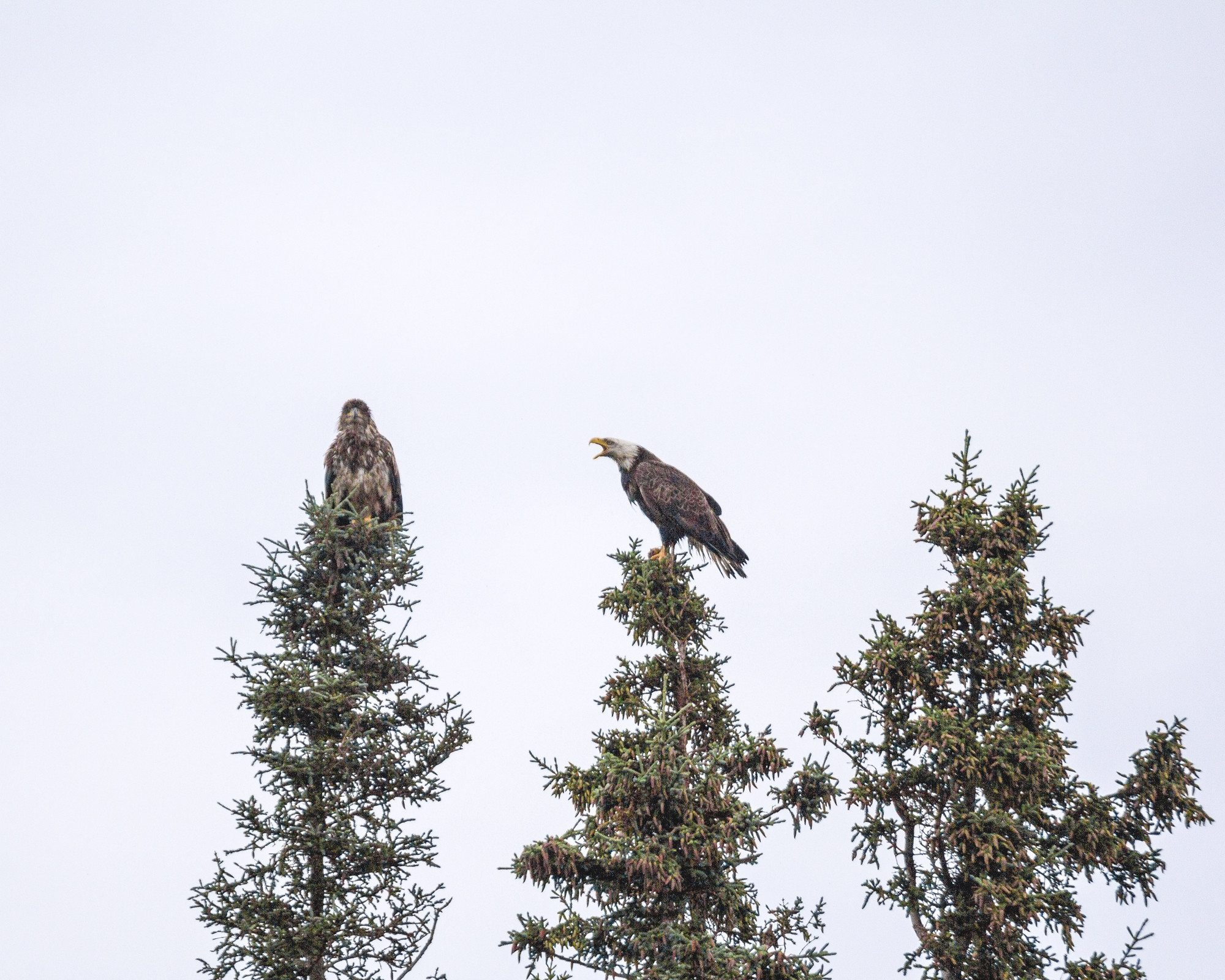
The bald eagle (Haliaeetus leucocephalus) and the golden eagle (Aquila chrysaetos) can both be seen soaring over Glacier’s skies. As one of the most important golden eagle migration routes in North America, Glacier established a Hawk Watch International site in 2018 to monitor raptors during fall migration. Research has shown that human presence can disturb eagle nesting and foraging, so known nest areas in national parks are often closed to visitors.

Varied Thrush
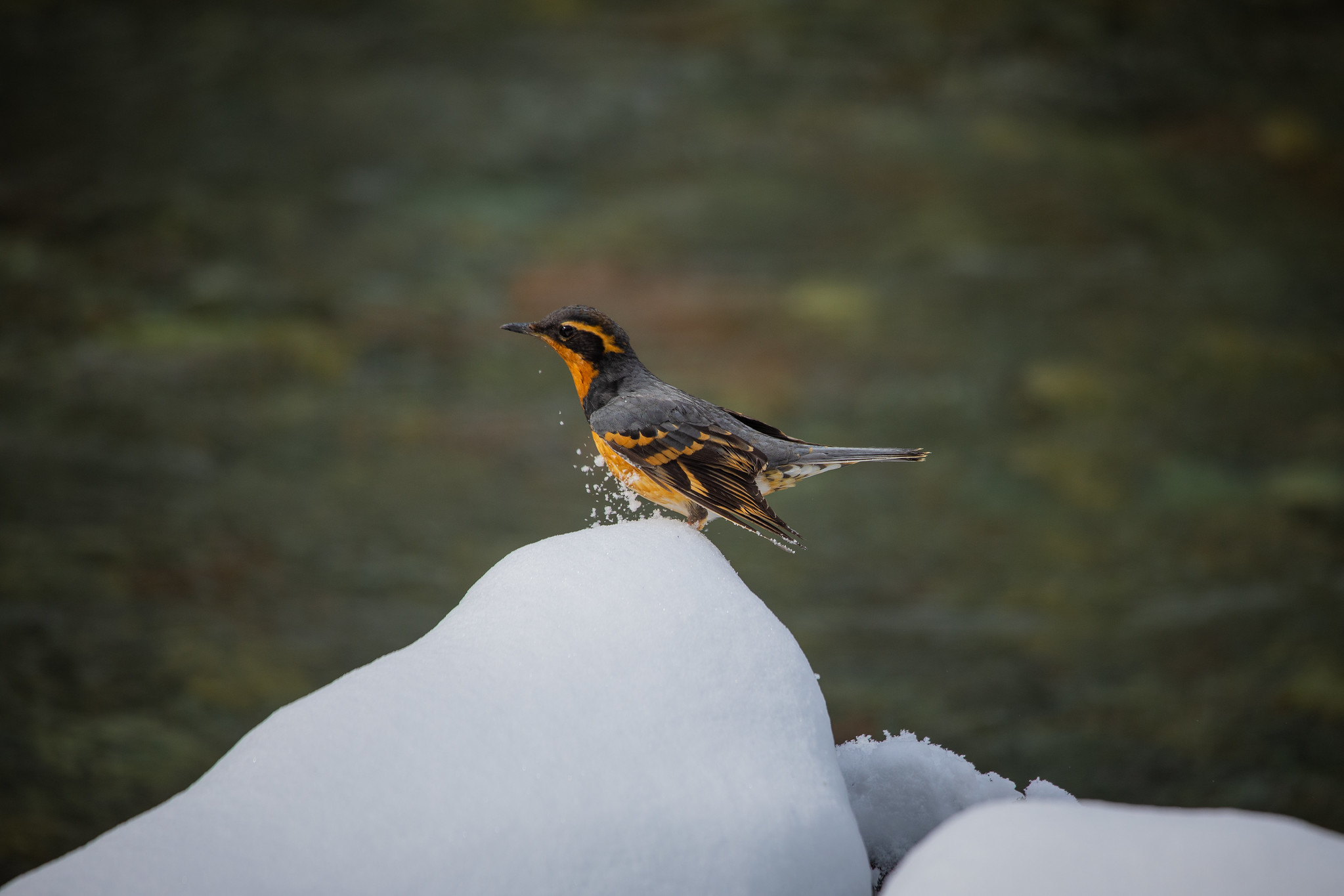
These secretive birds rarely flaunt their flashy colors. Instead, they sing shyly from dense forests. Adult males have a light orange line over the eyes, blue-gray backs, and a burnt-orange throat and belly separated by a dark breast band but are heard much more often than seen. They have a distinctive song of a long, single whistle on one pitch; it can sometimes be mistaken for a human distress whistle.

American Dipper
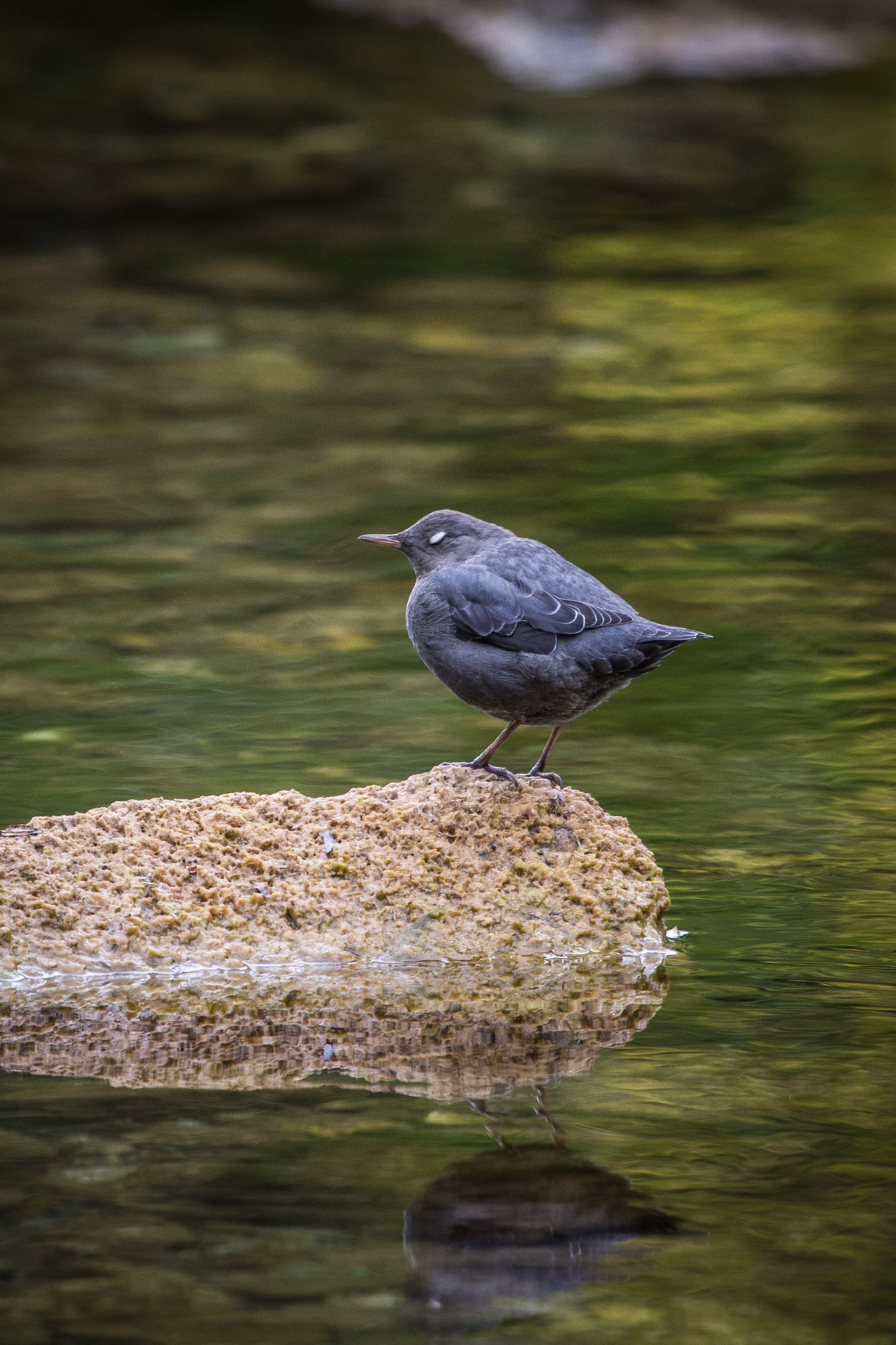
The American dipper is a stocky, round-bodied bird with grayish-brown feathers, a dark bill, and long, pale legs. The bird gets its name from bobbing up and down while standing, a funny but easily identifying trait. They sing a high-pitched song that is a series of whistled phrases, each repeated two to four times with a buzzy call that sounds similar to “dzeet.”

Fire-Adapted Woodpeckers
Glacier is the perfect home for several fire-adapted woodpeckers. These are birds that depend on regular wildfire to create their habitat. Listen for “thunks” or knocking sounds of woodpeckers as they excavate tree cavities in search of a meal.

American Martens
Martes americana The American marten, also called a pine marten, is part of the weasel family. Pine martens have short limbs and a long, bushy tail. They are light to dark brown or black with a throat patch that is an irregular shape and size, with ranges in color from buff to bright orange.
7 total sites
The Logging Creek Campground is one of the smaller campgrounds in Glacier and is located on the west side of the park, south of Polebridge. Access is via the Inside North Fork Road, a dusty narrow winding road. Caution is advised when traveling this road. RVs and trailers are not permitted. Once there, campers will find a small primitive campground with all the solitude one could want. The trailhead to Logging Lake is nearby and the easy hike to the lake is a great family day hike.
7 total sites
Quartz Creek Campground is the smallest campground in Glacier National Park and remains in primitive status all season. It is located on the west side of the park in the North Fork area and is accessed by the Inside North Fork Road, a rough, dusty, dirt road with many blind curves and few pullouts. Trailers are not permitted. Tent campers will enjoy a wilderness experience at the campground.
84 total sites · 83 reservable
Rising Sun Campground is located just west of St. Mary and halfway along St. Mary Lake. Campers at Rising Sun will enjoy beautiful sunrises in the morning with Red Eagle Mountain as a backdrop, and the campground serves as a convenient base camp to many day hikes located east of Logan Pass. Some sites are open, allowing for cool breezes throughout the day, while others are located among trees, accommodating those seeking some shade and privacy.
25 total sites · 25 reservable
Sprague Creek is a small campground located on the northeast shore of Lake McDonald, just off Going-to-the-Sun Road. Towed units (vehicle plus unit) and RVs exceeding 21 feet are not permitted in this campground. The campground is located within trees, providing shade during warm summers. Some sites near the shore have unobstructed views of Lake McDonald. Reservations are required to camp at Sprague Creek Campground. Click the reservation button below for details.
148 total sites · 148 reservable
St. Mary Campground is the largest campground on the east side of Glacier National Park and is open year-round. Activities such as interpretive programs, book sales, and shuttle service tours are located at the nearby St. Mary Visitor Center. St. Mary requires a reservation throughout the season. Though shade may be sparse, aspen trees grace St. Mary Campground with soothing sounds from spring and summer breezes, and colorful splashes of yellow late in the season.
109 total sites · 110 reservable
The campground at Many Glacier is one of the most popular campgrounds in Glacier National Park. The campground is situated within trees for tent and RV campers, though there are only 13 sites that can accommodate vehicles up to 35 feet in length. Bring your binoculars, as there are opportunities to view wildlife like bighorn sheep, moose, and bears. Many Glacier also provides access to some of the best day hikes in the park. Advanced reservations are required for all sites.
100 total sites · 101 reservable
Two Medicine is approximately 13 miles from East Glacier. Sites within the campground at are generally shaded by trees, and offer some privacy from other campers. Boat tours and Red Bus tours can be found at Two Medicine. There are numerous day hiking opportunities available, including a handicap accessible trail to Running Eagle Falls. The campground remains open in late-September for primitive camping with no running water or flush toilets. Advanced reservations are required for all sites.
13 total sites
Kintla Lake Campground is Glacier National Park's most remote frontcountry and car camping campground. It is located in the uppermost northwest section of the park known as the North Fork, approximately 40 miles from the west entrance. Access is via a rough dirt road. Trailers not permitted. Due to its remote location, the campground is very quiet and rarely fills, offering tent campers a sense of solitude. The campground sits on Kintla Lake.
194 total sites · 188 reservable
Apgar Campground is the largest campground in the park. It is situated in trees and provides tent and RV campers with shade and some privacy. Evening sunsets on Lake McDonald are only a short stroll, and you won't want to miss evening programs with a ranger at the Apgar Amphitheater. Many trails are located within a short drive of the campground. Advanced reservations are required for all sites. Click the reservation button below for details.
48 total sites
Bowman Lake Campground is located in the North Fork area of Glacier National Park approximately 32.5 miles from the west entrance and 30 miles from the Canadian border. The drive to Bowman Lake is a very slow, dusty, and bumpy ride on dirt roads. Trailers are not permitted. The campground is located close to the shore of Bowman Lake and camp sites are within trees for shade and some privacy. Tent campers looking for peace and quiet will enjoy Bowman Lake for its serenity and remote location.
87 total sites · 87 reservable
Avalanche Campground is located in one of the most popular sections of Glacier National Park west of the Continental Divide. The campground accommodates tent and RV campers, however only 50 sites will accommodate vehicle lengths up to 26 feet. Bring your hiking boots and binoculars. Two popular day hikes offer spectacular scenery and glimpses of birds and wildlife that inhabit the area. Advanced reservations are required for all sites. Check Recreation.gov for details.
178 total sites · 178 reservable
Fish Creek is the second largest campground in the park and is one of the campgrounds in the park that takes reservations. Sites within the campground are surrounded by trees and provide shade and some privacy to both tent and RV campers. Some sites, though not directly on the shore of Lake McDonald, offer filtered views of the lake.
14 total sites
The Cut Bank Campground is located on the east side of Glacier National Park and provides a sense of peace and quiet that may not be found in larger campgrounds within the park. The campground is accessed by a 5-mile dirt road off of highway 89. The campground is geared toward tent campers. RVs are not recommended. Starting in 2025, Scan & Pay will be required through the Recreation.gov app to pay for a campsite. This requires downloading the free Recreation.gov mobile app prior to arrival.
Entrance Fees